The Paradis Bridge was manufactured by CSUB, a leading company for composite technologies from Norway. CSUB was responsible for the entire production of the bridge at its factory in Eydehavn, Arendal.
As a leading supplier of multiaxial fabrics made of glass and carbon fibers, SAERTEX provided the essential materials needed to manufacture the bridge elements. It was important for CSUB to have a reliable supplier. SAERTEX not only ensured that production capacities were available at short notice, but also supplied qualified materials that met the high requirements of the project. The consistently high quality of the products was just as important as the market availability of special fibers.
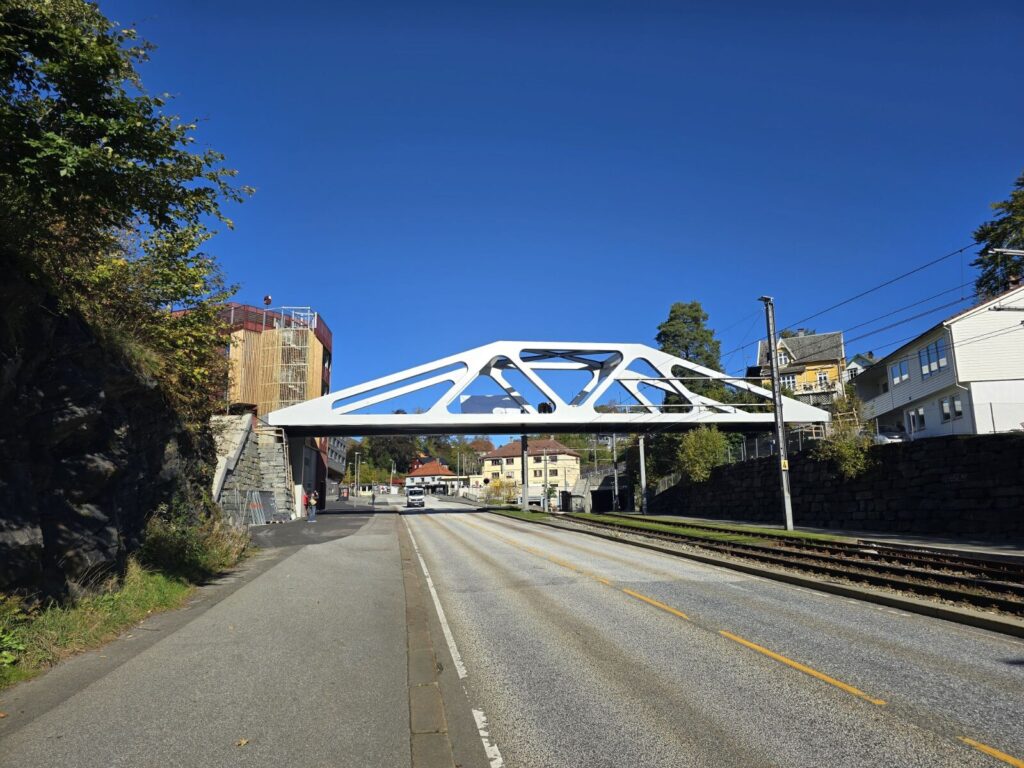
The so-called non-crimp fabrics (NCFs) were processed using a vacuum infusion process to ensure maximum strength with minimum material consumption. The bridge consists of three main parts: the bridge deck, the upper cross, and the lateral truss structures, which were assembled after fabrication. CSUB worked closely with all partners to ensure that the materials and technologies met the specific requirements of the project and that all processes ran smoothly. The project was commissioned by Vestland Fylkeskommune, supported by technical partners Fireco, Multiconsult, and Royal HaskoningDHV, who contributed their expertise to the successful completion of the project.
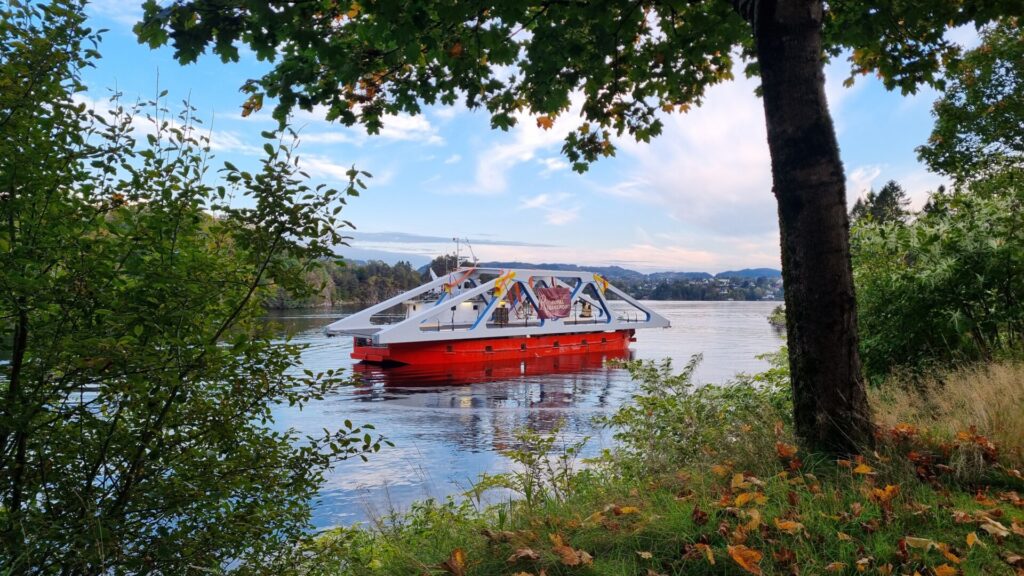
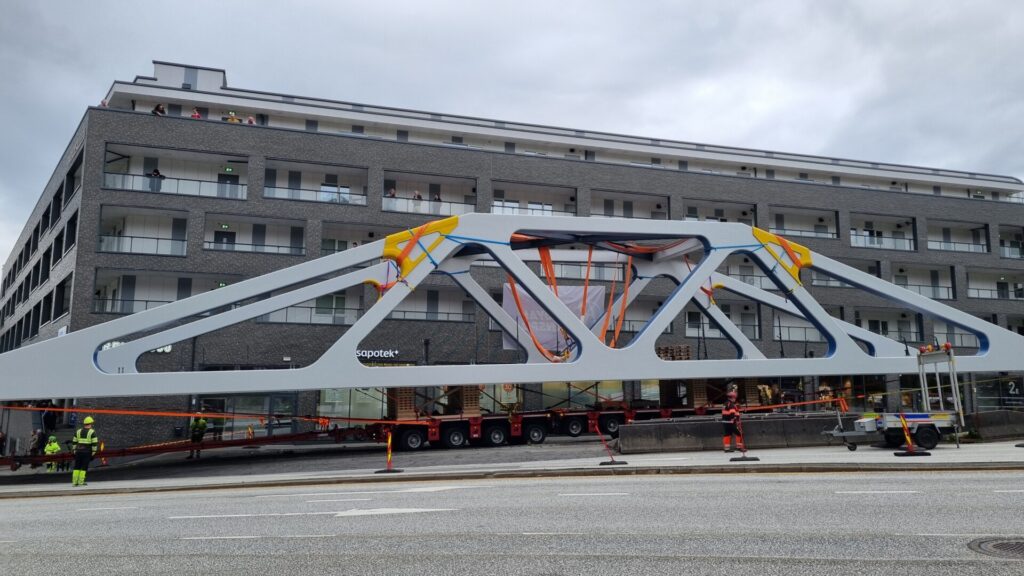
One outstanding feature of the project was the transportation of the bridge. The entire structure was manufactured as a single piece and transported to its destination via a complex logistics chain of truck and ship transportation - a true logistical masterpiece.




 Deutsch
  English
  Français