Multiaxial & unidirectional fabrics

For demanding composite components

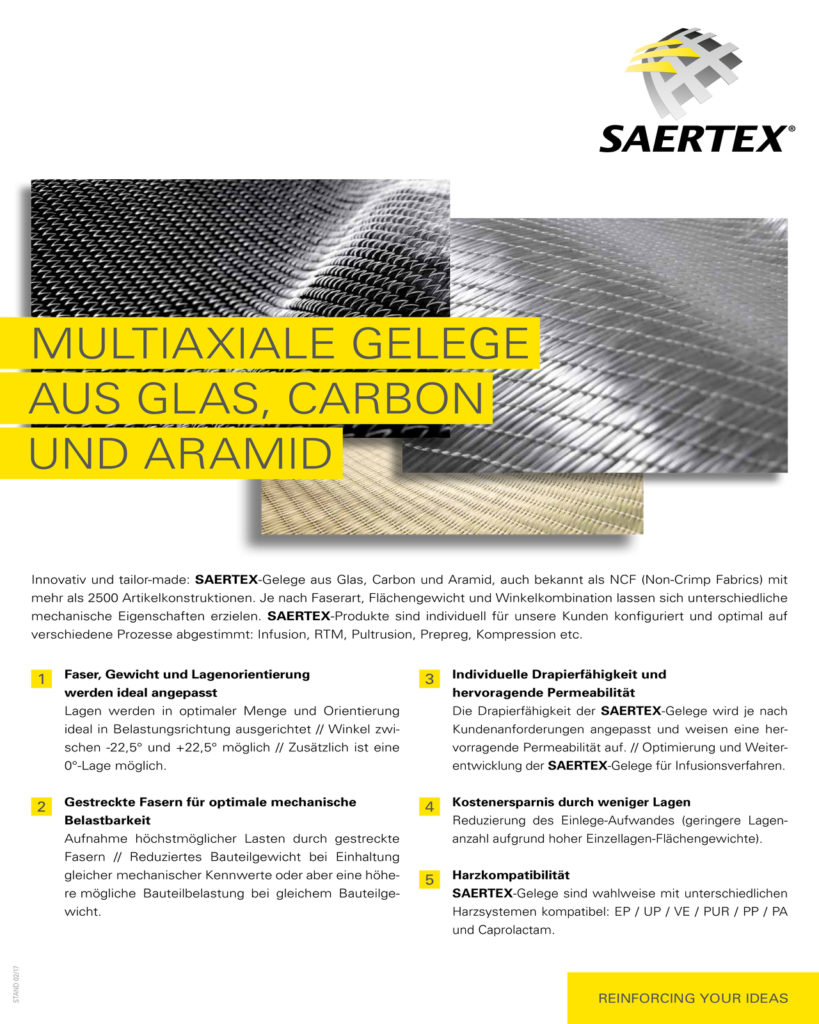
Our multiaxial and unidirectional fabrics (non-crimp fabrics) form the basis for high-performance fiber composite solutions, precisely tailored to the load, geometry, and process. With individually selectable layer structures, fiber orientations, and types, it is possible to create structures that combine high stiffness, strength, and weight advantages.

Thanks to continuous further development and application-specific variants, we offer technical textiles at the cutting edge of composite technology.

From unidirectional to multiaxial

Unidirectional fabrics (UDs) offer maximum strength and rigidity in the fiber direction. The targeted fiber orientation ensures optimum load transfer. Whether in construction, wind power or vehicle construction - UDs are an essential component of modern lightweight construction solutions.

Our multiaxial fabrics (NCFs) combine strength and flexibility. Variable fiber layers - e.g. 0°, ±45° or 90° - allow them to absorb loads in several directions. This results in lighter, stiffer and at the same time robust components with high process reliability in processes such as infusion, RTM or prepreg.

Advantages of SAERTEX multiaxial fabrics

Maximum strength through stretched fibers

Optimal for maximum load absorption in the component - the quantity and orientation of the layers are precisely matched to the load direction.

Weight savings

Reduced component weight while maintaining the same mechanical characteristics or greater load capacity at the same weight.

Fewer layers = less effort and lower costs

High areal weights reduce the amount of material required as well as the insertion effort and thus also the costs.

Excellent drapability and permeability

Specially developed for infusion processes and individually adapted to customer requirements.

Resin compatibility

Compatible with all common matrix systems (Epoxy resins, unsaturated polyester resin, vinyl ester resin, polyurethane, polypropylene, polyamide and caprolactam etc.).

Individual configuration - tailored to your process

Available with reinforcement threads, mats or fleece, up to 3810 mm wide and 4000 g/m² weight - custom configurations on request.

Technical data of our fabrics

Properties, material compatibility and processing instructions


Technical dataMultiaxial fabrics
Reinforcement materialsGlass, carbon or aramid fibers, natural fibers such as flax, special fibers such as basalt or Dyneema, hybrid fabrics
Individual fiber architecturesFiber orientations freely selectable. Angles between -22.5° and +22.5° possible, up to 5 orientations in one production step.
Suitable methodsVacuum infusion, (HP-)RTM, wet/hot pressing, winding processes, SMC, T-RTM, pultrusion, prepreg, hand laminate, etc.
Max. width3810 mm, individual tapes on request
Max. surface weight4000 g/m²
Resin compatibilityEpoxy resins (EP), unsaturated polyester resins (UP), vinyl ester resins (VE), polyurethanes (PU), polypropylene (PP), polyamides (PA), and caprolactam, etc.
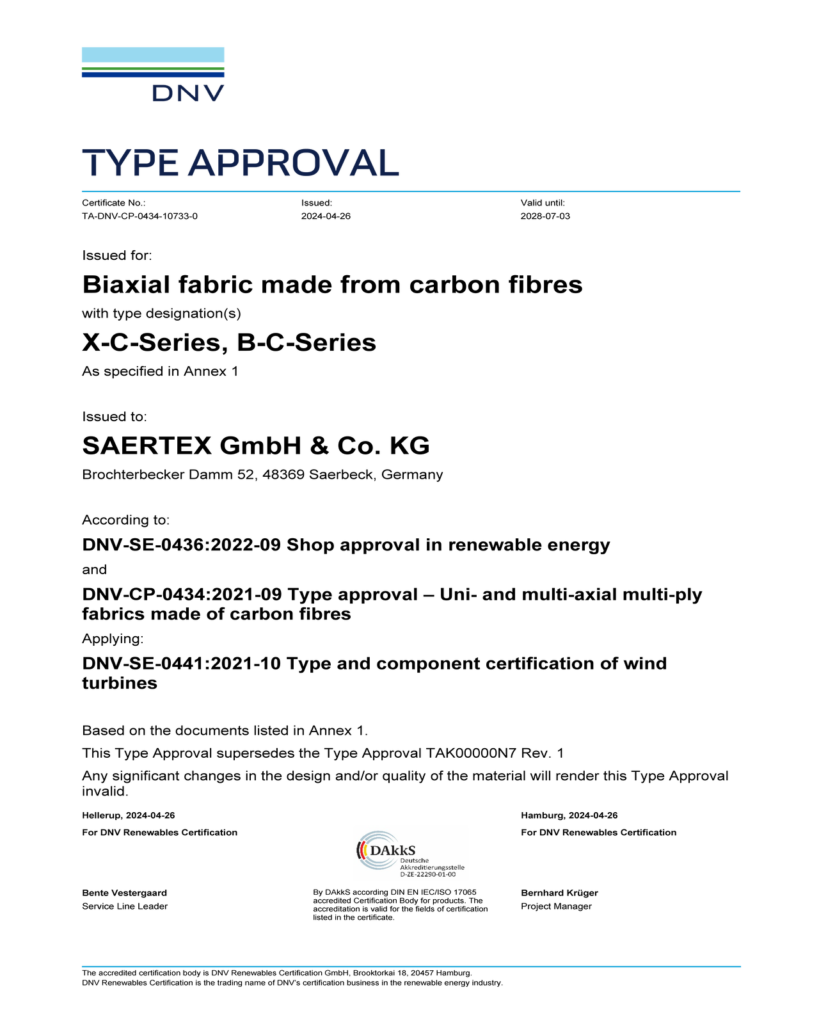
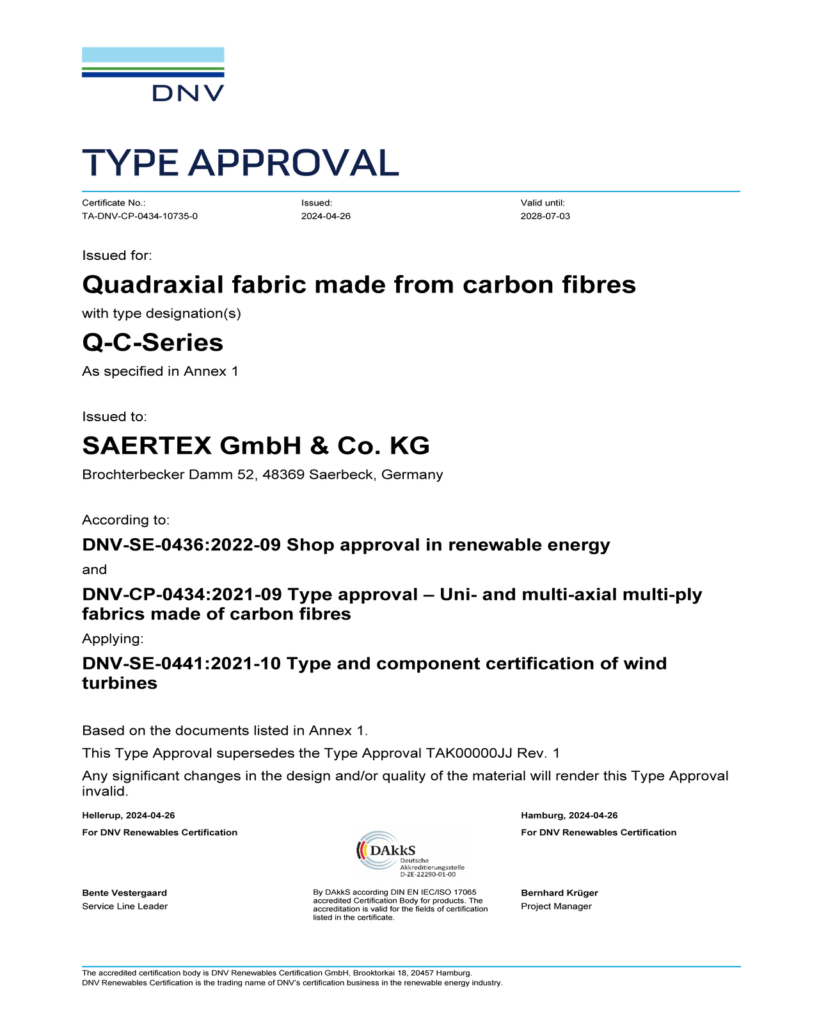
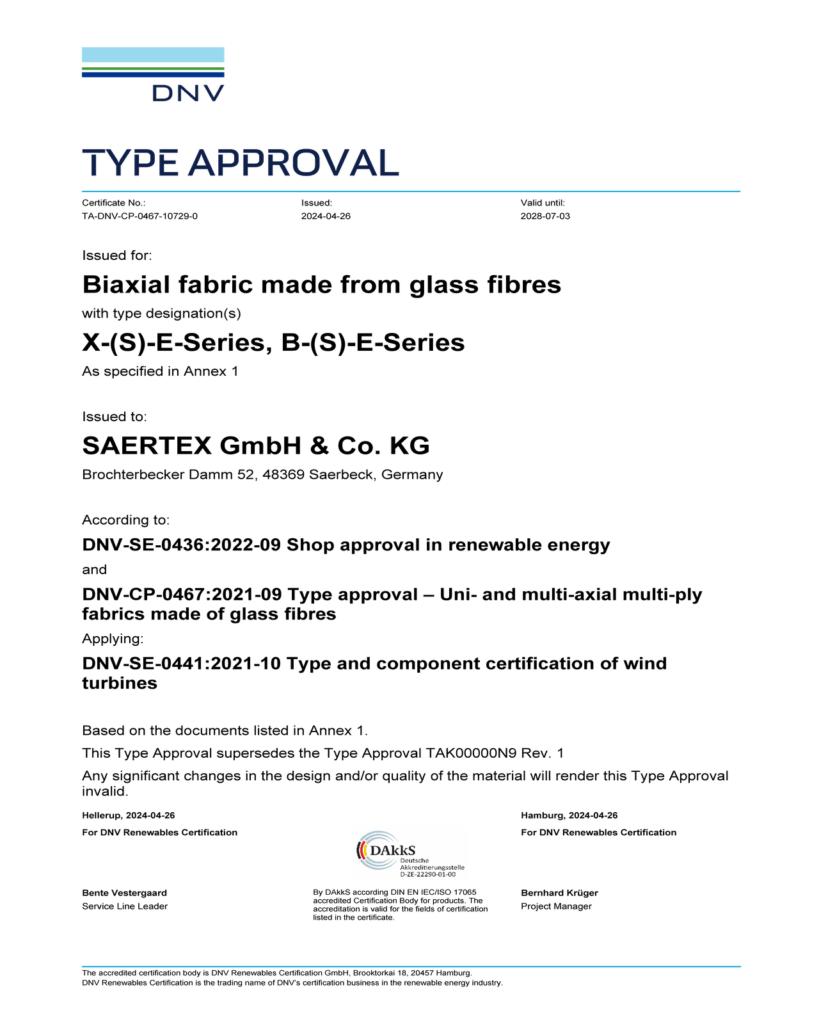
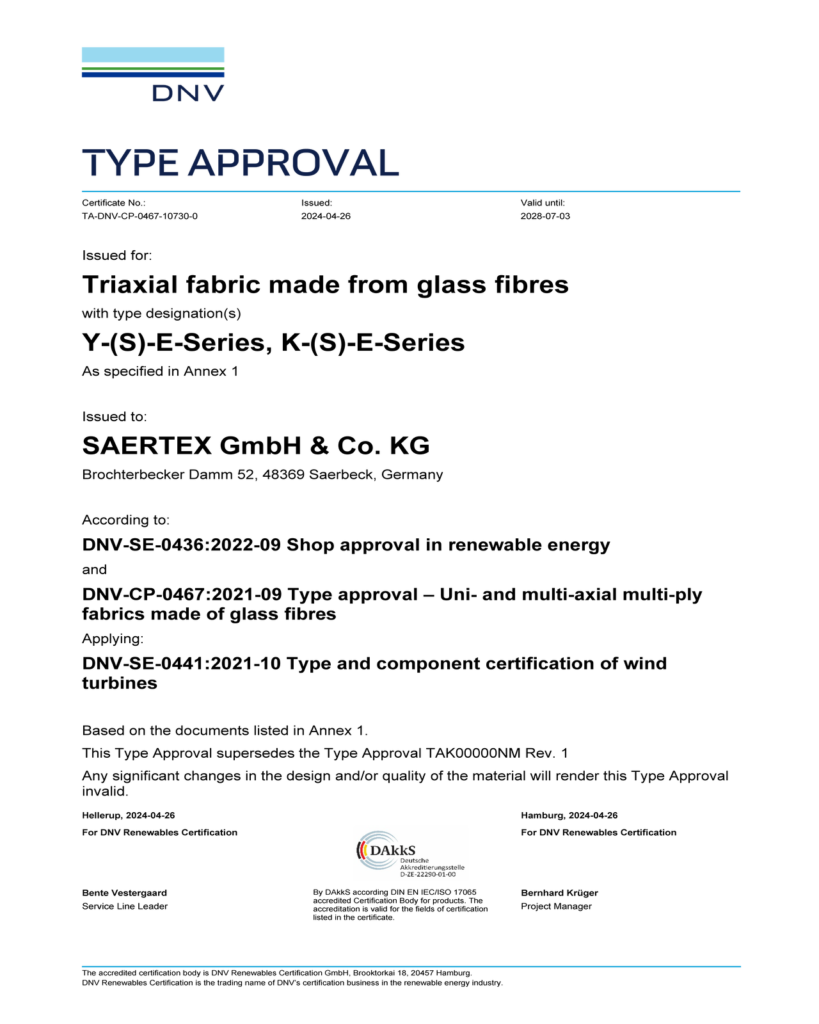
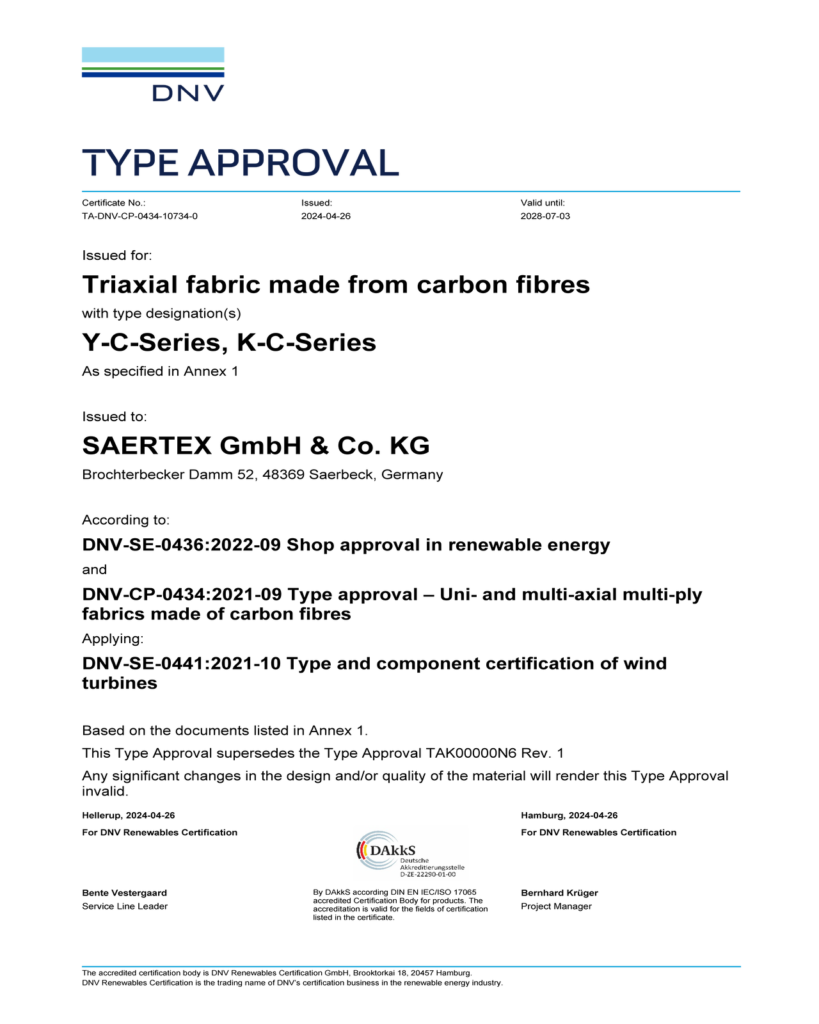
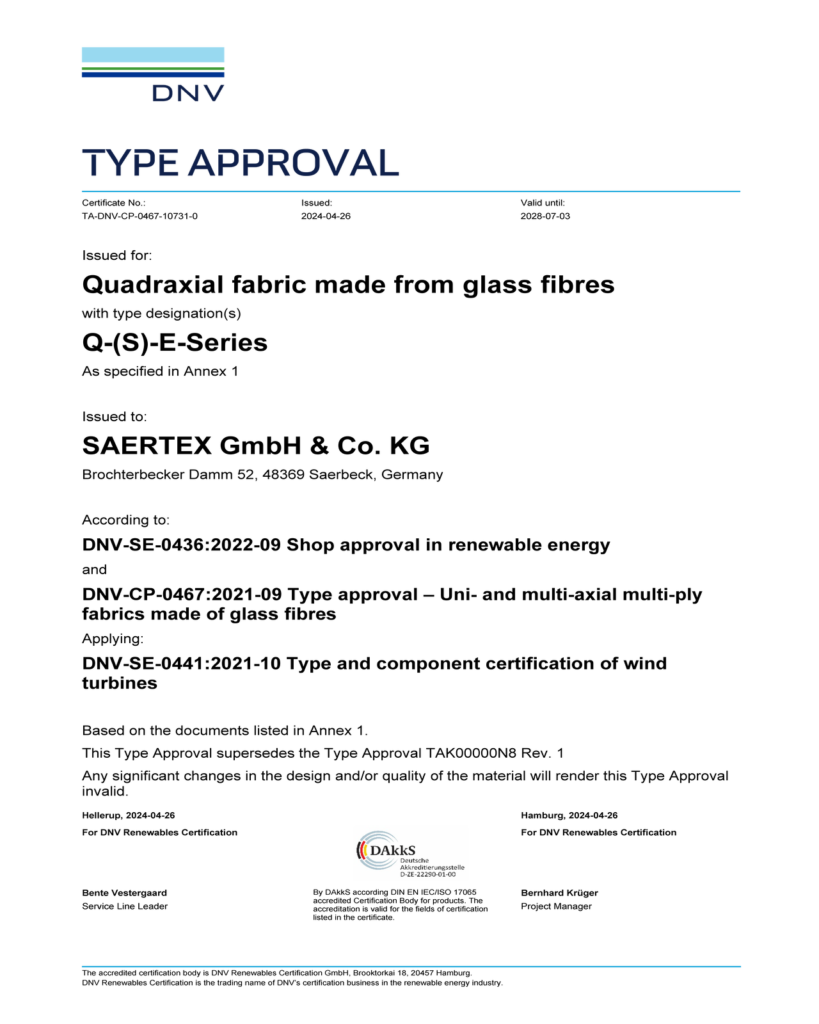
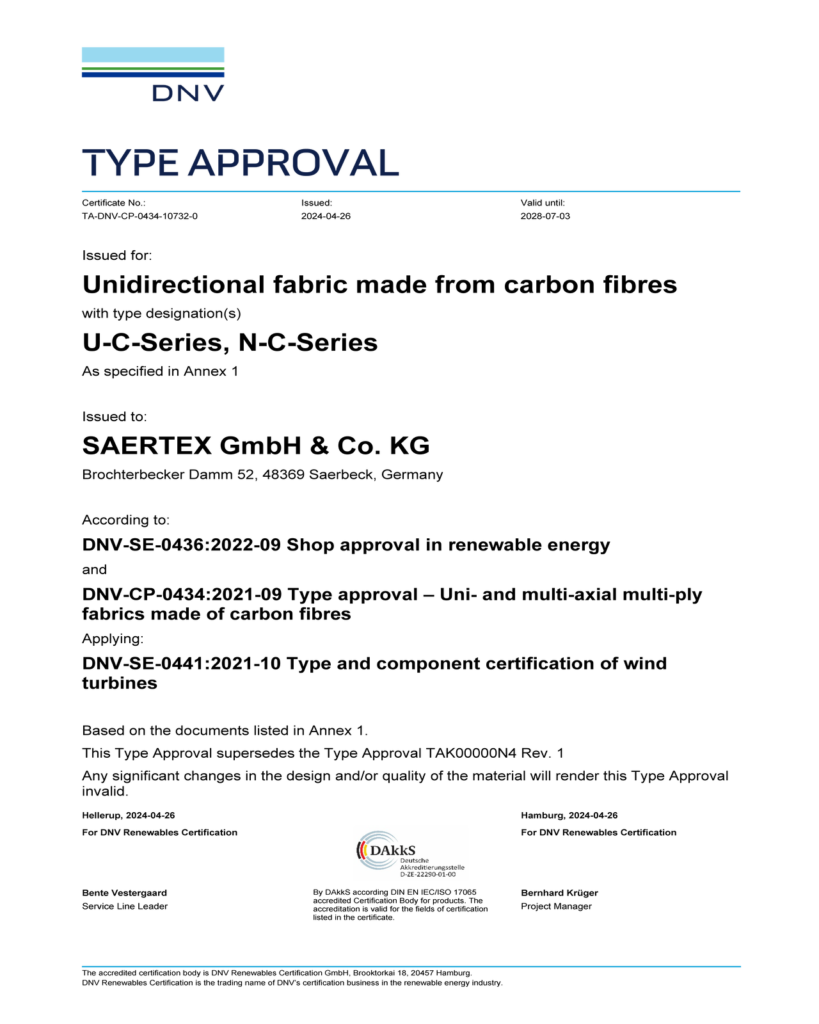
CertificatesDNV type approval for glass and carbon fabrics

Frequently asked questions

Precise. Flexible. On time. When it comes to multiaxial fabrics, it's not just the quality of the reinforcement material that counts, but also reliable delivery - precisely tailored to your production. In the following FAQ, we answer all your questions about ordering processes, delivery times, transport conditions and special logistics requirements for multiaxial fabrics.

How long are the delivery times?

Depending on material, production costs and location. Our standard products such as the Basicline are generally available at short notice.

Advantages of SAERTEX multiaxial fabrics

Maximum strength through stretched fibers

Optimal for maximum load absorption in the component - the quantity and orientation of the layers are precisely matched to the load direction.

Weight savings

Reduced component weight while maintaining the same mechanical characteristics or greater load capacity at the same weight.

Fewer layers = less effort and lower costs

High areal weights reduce the amount of material required as well as the insertion effort and thus also the costs.

Excellent drapability and permeability

Specially developed for infusion processes and individually adapted to customer requirements.

Resin compatibility

Compatible with all common matrix systems (Epoxy resins, unsaturated polyester resin, vinyl ester resin, polyurethane, polypropylene, polyamide and caprolactam etc.).

Individual configuration - tailored to your process

Available with reinforcement threads, mats or fleece, up to 3810 mm wide and 4000 g/m² weight - custom configurations on request.

Still looking for the right material for your composite component?

Here you will find an overview of our fabric variants - from standard solutions to application-specific product developments.

Focus on multiaxial and unidirectional fabrics

Get to know our fabrics even better - with additional details, technical background information and more.

 Technical Certificates, Certificates & Company Policies

Type Approval DNV Carbon Triaxial

Learn more
 Technical Certificates, Certificates & Company Policies

Type Approval DNV Glass Biaxial

Learn more
 Technical Certificates, Certificates & Company Policies

Type Approval DNV Glass Quadraxial

Learn more
 Technical Certificates, Certificates & Company Policies

Type Approval DNV Glass Triaxial

Learn more
 Technical Certificates, Certificates & Company Policies

Type Approval DNV Glass Unidirectional

Learn more

Contact us

Further information on data processing can be found in our Privacy policy.*